

In a new article in the EBU Technical Review series, Dr Brugger and Ms Gbenga-Ilori (IRT) investigate the potential of Digital Terrestrial Television (DTT) to provide a competitive platform for future broadcasting applications. They conclude that further reducing the broadcasting spectrum would seriously jeopardize the competitivenes of the DTT platform.
| Three key developments
Most European countries are going through three switchover phases:
1. Conversion from analogue to SDTV using MPEG-2 2. Conversion from MPEG-2 to MPEG-4/AVC 3. Transition from SDTV to HDTV
The first two phases reduce the use of spectrum, but the transition to HDTV requires more spectrum for a given set of programmes. | 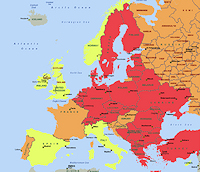 |
In the article "Spectrum usage and requirements - for future terrestrial broadcast applications", the authors assess the number of programmes that can be accomodated when the latest technology is applied (HDTV, MPEG-4 and DVB-T2).
DTT can be competitive
The investigation shows that it is possible to provide a competitive offer on the terrestrial platform within the framework of the GE06 agreement (certainly for fixed reception). It also concludes that broadcasters only benefit from a transition to MPEG-4 and/or DVB-T2 when it can be used for an improved programme offer (HDTV and/or more programmes).
The authors therefore warn it is indispensible that the presently-available broadcasting spectrum remains available for broadcasting, as reducing it would seriously damage endanger the competitivenes of the Digital Terrestrial Television (DTT) platform.