
Alexandre Rouxel (EBU)
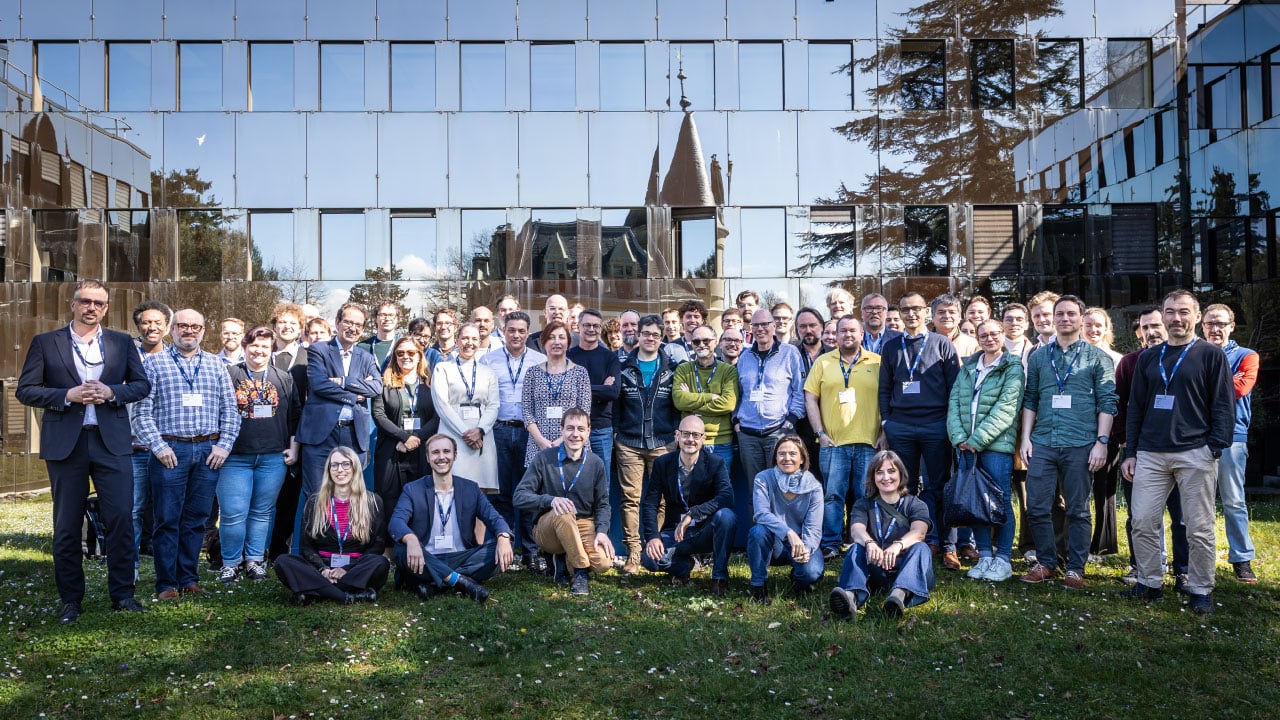
For three days in March, data scientists, AI engineers, media technologists and PSM strategists converged on EBU HQ in Geneva for our annual Data Technology Seminar. Their discussions ranged across four key thematic areas: strategy and governance, metadata and infrastructure, AI integration aligned with PSM values, and evaluation and trust. That last one surfaced more often than any other in the questions from the floor, showing the extent to which trust remains at the heart of the PSM mission. Here are eight trends that emerged across the three days.
1. AI moves from experiment to execution.
AI is no longer a parallel track to PSM operations but a layer reshaping audience value and internal workflows alike. Germany’s DW set out a holistic four-pillar strategy and proposed a cross-broadcaster collaboration platform, while the France Télévisions medIAenrich initiative for metadata generation is to be made available to all EBU Members – both positive signals for platform-level cooperation.
2. Generative AI does not replace structured metadata – it raises its value.
Controlled vocabularies still anchor meaning; AI-generated representations of content extend discovery into territory that explicit labels cannot reach. The future of search combines both, illustrated by BBC work on news content. Joint EBU-SMPTE work – including a proposed identifier that registers each AI system as a uniquely addressable entity, so its outputs can be shared across organizations as reliably as any other metadata – points in the same direction.
3. Agents have arrived, and they collaborate.
AI is shifting from single tools to coordinated agents that orchestrate tasks and interact in group contexts. ZDF’s Agentic Audience system, with ten named audience personas coordinated by a moderator agent, offered an early glimpse of multi-agent coordination as a workflow paradigm – explicitly framed as decision support rather than content generation, with editorial responsibility retained by the editor.
4. Content understanding goes deep and multimodal.
Production systems are converging on richer understanding across audio, video and text, driven by iterative design and domain adaptation.
DW’s collaboration with Ethiopian startup Lesan AI on Amharic – framed by the project team as a “low-interest” rather than “low-resource” language, with no commercial offering despite some 57 million speakers – shows PSM filling gaps the market has overlooked.
5. Production AI lives or dies on editorial fit.
Embedding AI in production pipelines amplifies efficiency, but the central tension is rarely between human and machine – it is between competing editorial values that automation surfaces. ZDF’s Easy Language work, transforming news texts for an audience of 16–20 million in Germany, exposed disagreements between reviewers about where simplification ends and inaccuracy begins.
6. Personalization is calibration, not just algorithm.
Recommender systems are evolving to balance engagement, efficiency and public service values. ZDF’s A/B testing across three streaming slots showed that the best variant of the same model differed in each, with popularity helping in one slot, hurting in another, and proving neutral in the third – a reminder that recommender tuning is inseparable from interface design.
7. Evaluation becomes a first-class concern.
As AI enters production, ad hoc testing no longer suffices. The BBC-EBU News Integrity in AI Assistants Toolkit – drawing on research across 22 PSM organizations, 18 countries and 14 languages – offers a shared taxonomy of failure modes and a framework for structured benchmarking. The clear message from EBU Members: benchmarking is no longer a nice-to-have.
8. Sovereignty is an infrastructure question.
Owning the environments on which AI runs is becoming a requirement for scalability, cost control and editorial independence. RTBF’s work on running AI at scale on its own GPUs offered a concrete example of what that looks like in practice.
This article first appeared in the June 2026 issue of tech-i magazine.