

NHK, Japan’s national broadcaster’s 2010 showcase event showed a jaw-dropping demonstration of how our television lives may be in the next decade.
The features of context-aware TV
It’s called ‘context-aware TV’. Tomorrows TV will do very much more that display programmes. It begins when you enter the room. Face recognition on you picks out who you are from its files. It also recognizes your voice, so now you are well on your way to being personalized. It checks what time of day it is, and examines the objects around you (say, on the coffee table). Now it adds all that up, and tries to guess what you want to watch, and offers you a menu. Oh, by the way, the face recognition can tell whether you are in a happy or sad mood. Don't ever bring an EBU document with me into the TV room – you might get hours of Eurovision Song Contests.
When you decide what you want to watch, you just need to point a finger in the air at the spot on the menu, and away it goes – no remote control needed.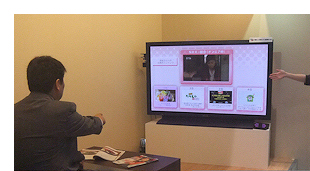
Another really nice feature is that if you ever pick up a book or newspaper to read, the TV knows this, and goes into ‘pause’ mode – to start again when you put the book down.
It doesn’t stop there. You can actually ask the TV questions while the shows is playing, like ‘which actor is playing that part?’ or ‘who’s that lady?’ If the answer can be found in the metadata, the TV tells you orally. Actually, I tried asking the TV ‘can you go and get me a beer?’ I don’t think it answered, though there might have been a quiet whisper “get it yourself, you lazy thing!”