

Delegates to the annual UN Internet Governance Forum in Vilnius in September 2010 were able to sample what may be the future shape of wireless Broadband Internet – the ‘4G’ system. 4G may be an alternative to WiMax, and the 3Gturbo systems. The ‘cell’ created for the IGF has a radius of about 500 metres, and used two (licensed for tests) transmitters around 2.5GHz. The printed flyers claimed download speeds of up to 100Mbit/s were achievable (wow!), and that 5Gbyte HD movies would be downloaded in minutes.
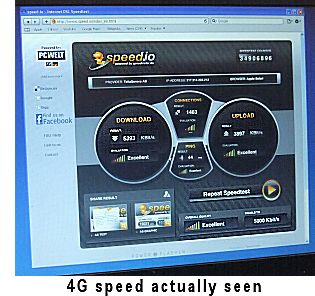
How did it work in practice? Delegates were loaned a TeliaSonera ‘dongle’ for laptops (see www.teliasonera.com) for details, which installed an application quickly, and which connected to the 4G network as first choice wireless Internet connection. The dongle was found to work best when folded vertical rather than horizontal. A check on the actual down speed on the authors laptop suggested it was about 5Mbit/s, and the up speed about 10% of that. The local Engineers software showed a higher maximum down speed on their machine of about 30Mbit/s. EBU work has shown that 720p/50 HDTV needs about 8Mbit/s, and 1080i more, so if VoD from Internet TV is to match broadcast quality, this is what it will need to provide.
Non video material arrived ‘lightning fast’. But full testing was difficult as there is little or no content available on the web at real HDTV rates (8-10Mbit/s), and the performance seems to be influenced by the capability of the PCs graphics card and the individual Browser.
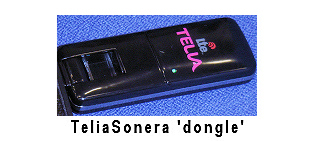
Using a Safari browser, all material labelled HD (but not real HD) from the web had the download speed running well ahead of the
video play-out speed, so play-out smoothness was excellent.
The system was impressive, but the ‘up to 100Mbit/s’ claim was not born out. Also, we can ask, with so many alternative technologies for Wireless Broadband, will fragmentation delay success?